Restoration Research Park
Center for Applied Forest Restoration Research & Advice
in Mexico's Balam-Kú Ecosystem Reserve
Planting a single tree is easy. But how do you restore vast, degraded forests and bring back as many of the locally lost species as possible? Which restoration methods are most effective in different ecosystems and different levels of degradation? How can regrowing forests withstand and mitigate the complex challenges of the climate crisis? How can restoration be maximally beneficial to the local community?
Many important scientific questions remain unanswered. And restoration initiatives around the world are waiting for answers.
Ongoing Research
Nitrogen-Fixing Species
Nitrogen is one of the key nutrients plants need to grow. To do so, they extract inorganic nitrogen from the forest soil. A lot of tropical dry forests are nitrogen limited. That means that the low levels of nitrogen is the primary reason plants in that ecosystem are not growing faster. So what can be done?
Well, there is one family of plants with a unique ability. Species in the Fabaceae family (also called Legumes) grow small nodules on their roots and in those nodules they host special bacteria. These bacteria can fix nitrogen from the atmosphere and convert it into the type of nitrogen that plants can use. So while all other plants are competing for the limited inorganic nitrogen in the forest soil, the Fabaceae species just create their own through this symbiosis.
But that's not all. When plant material of these species decompose, that ‘new’ nitrogen is made available to other plants around. So in effect, they are helping other plants without that ability, to grow too.
So what percentage of all the seedlings planted should be such N-fixers to maximise growth without reducing forest biodiversity?
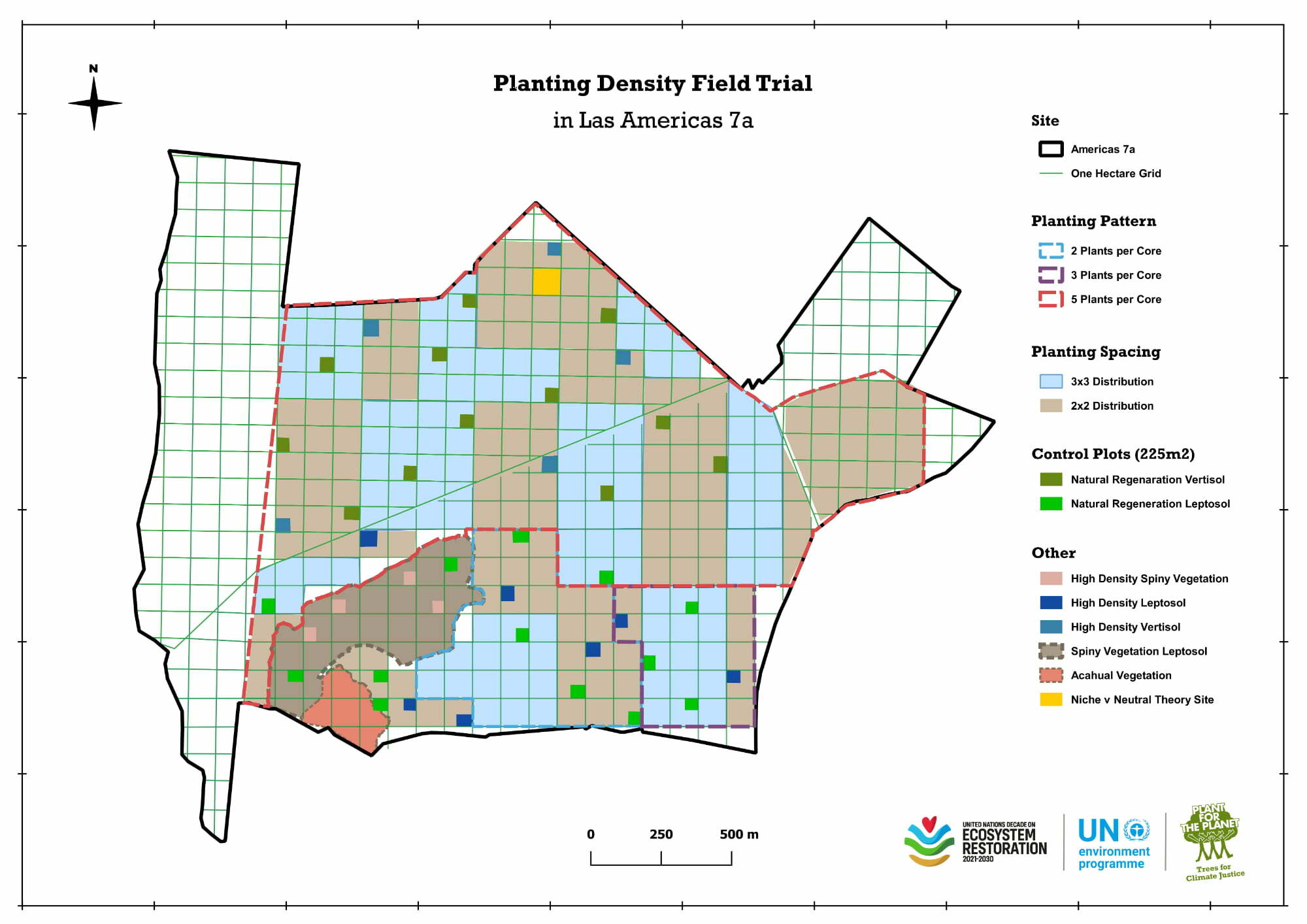
To answer that, we set up the first experiment with 16,000 trees in 2020. The experiment includes 160 subplots, evenly divided between ones that have 0%, 10%, 30% and 60% N-fixer species.
Forest Soil Microbiome Restoration
We are also testing a hypothesis that a simple addition of forest soil to a tree’s planting hole can increase survival rates. We expect to be introducing symbiotic microbes through the soil addition and thus the soil microorganism diversity in degraded soil towards communities that ‘help’ the trees grow.
Functional Diversity Restoration
How can we build optimal species mixes that catalyze the recovery of resilient forests and help ensure that the right trees are planted in the right places?
In collaboration with the Global Experiments Network.
The aim of the study is to test and develop a method for selecting species mixes that not only better resemble those found in natural forests, but also are more likely to be resilient to future environmental conditions while contributing to the multiple socio-environmental benefits of forest restoration.
We look at how specific values of functional traits as well as complex mixes of traits influence growth, survival, recovery of native biodiversity, provisioning of ecosystem services, and in the long-term, stand-level resilience to climate change. This will provide insights into patterns of ecosystem recovery under different compositions and combinations of planted tree species. By grouping species by their functional traits, we can start to predict how the extraordinary diversity of tree species across the tropics are likely to respond when planted across the range of environmental conditions present at specific restoration sites.
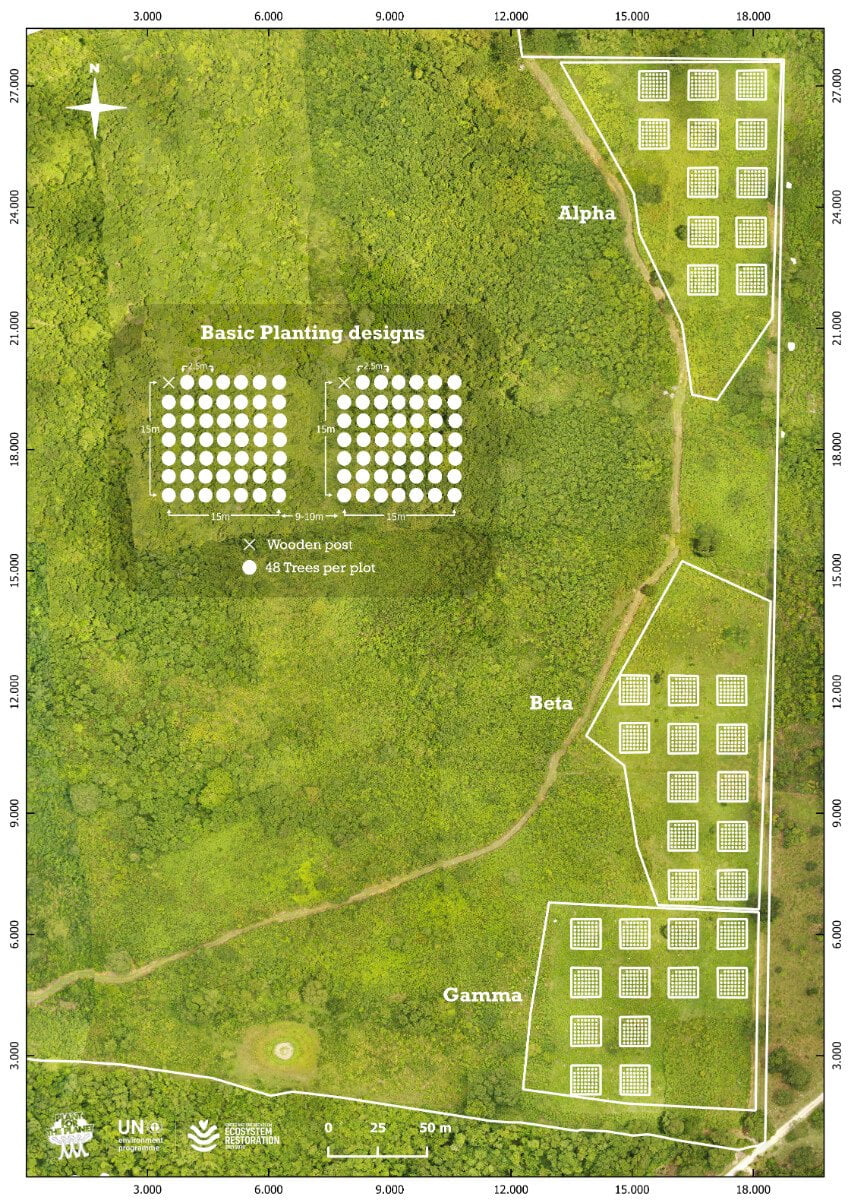
The study consists of 36 experimental plots that measure 15 × 15m each and are spaced 10 m apart. Each plot is given one of six different planting treatments – replicated six times.
Restoration Advice Team
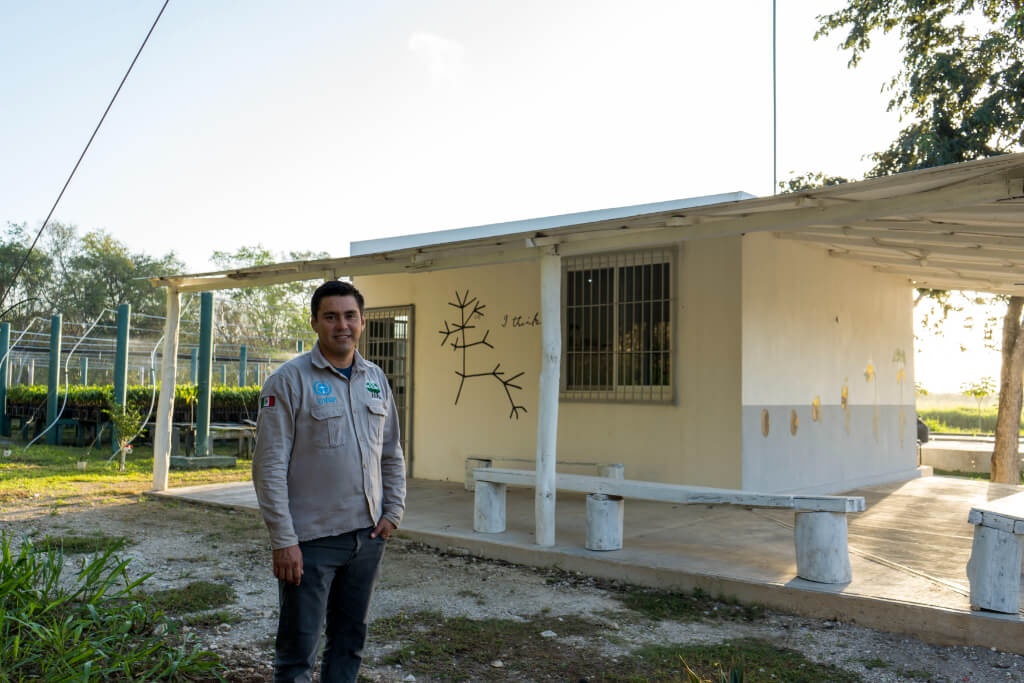
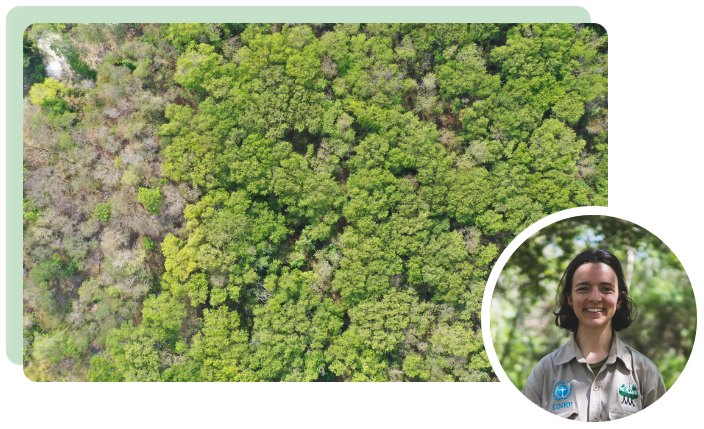
Nested within the Empowerment & Restoration Research Park is our Restoration Advice Team. We are building this team of experienced restoration ecologists to provide actionable restoration advice for projects around the world. The advice directly builds on the insights discovered by the research team.
Plant-for-the-Planet already collaborates with more than 200 forest restoration projects in over 50 countries. Many of them will benefit from the support of this team.
Infrastructure & Team
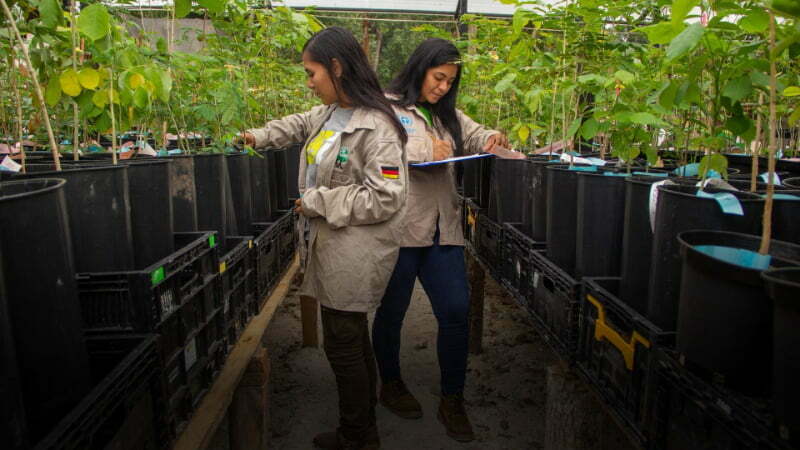
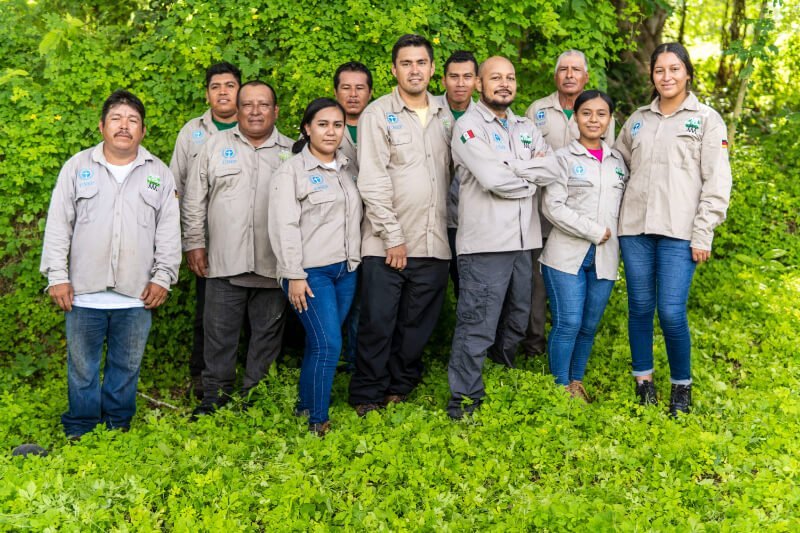
Research Team
129 ha Experimental Sites
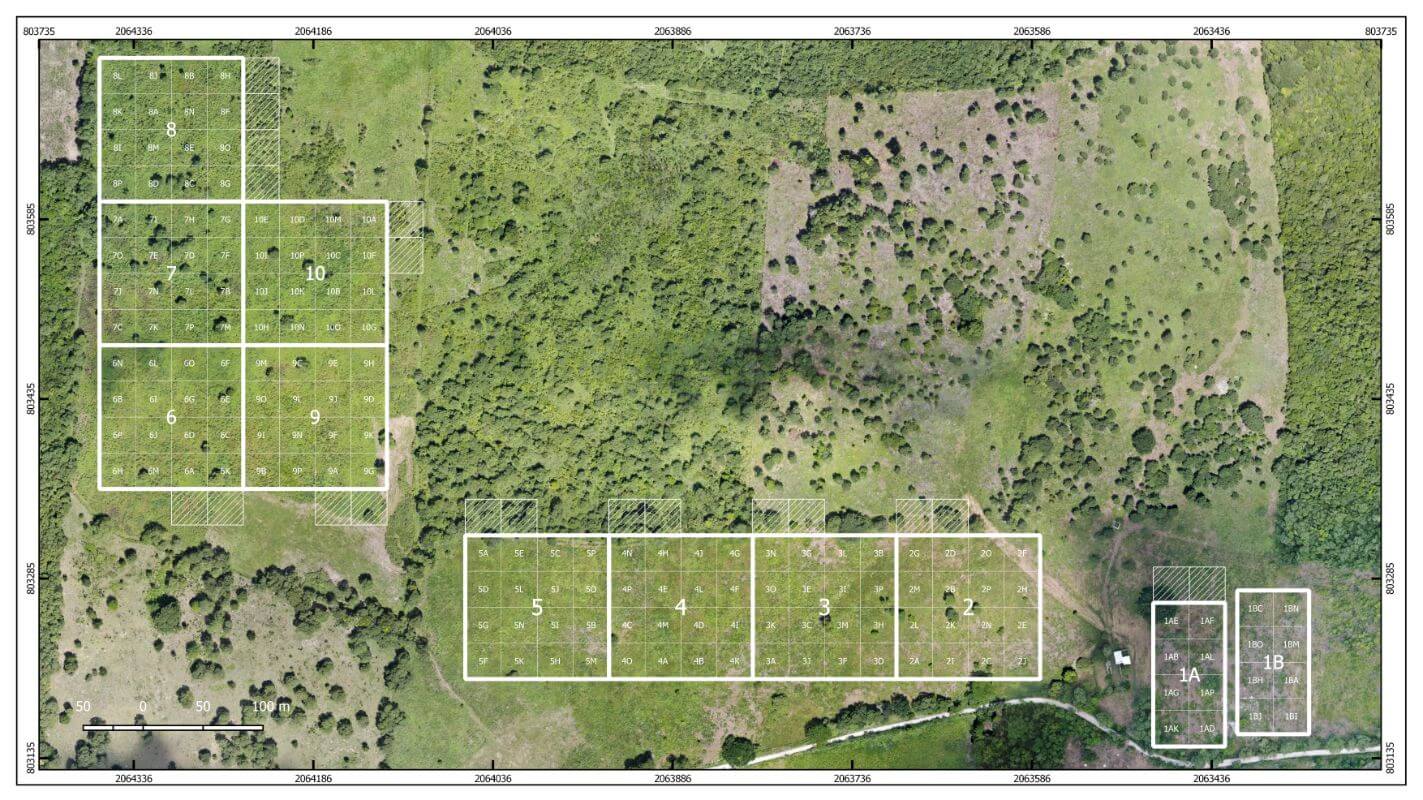
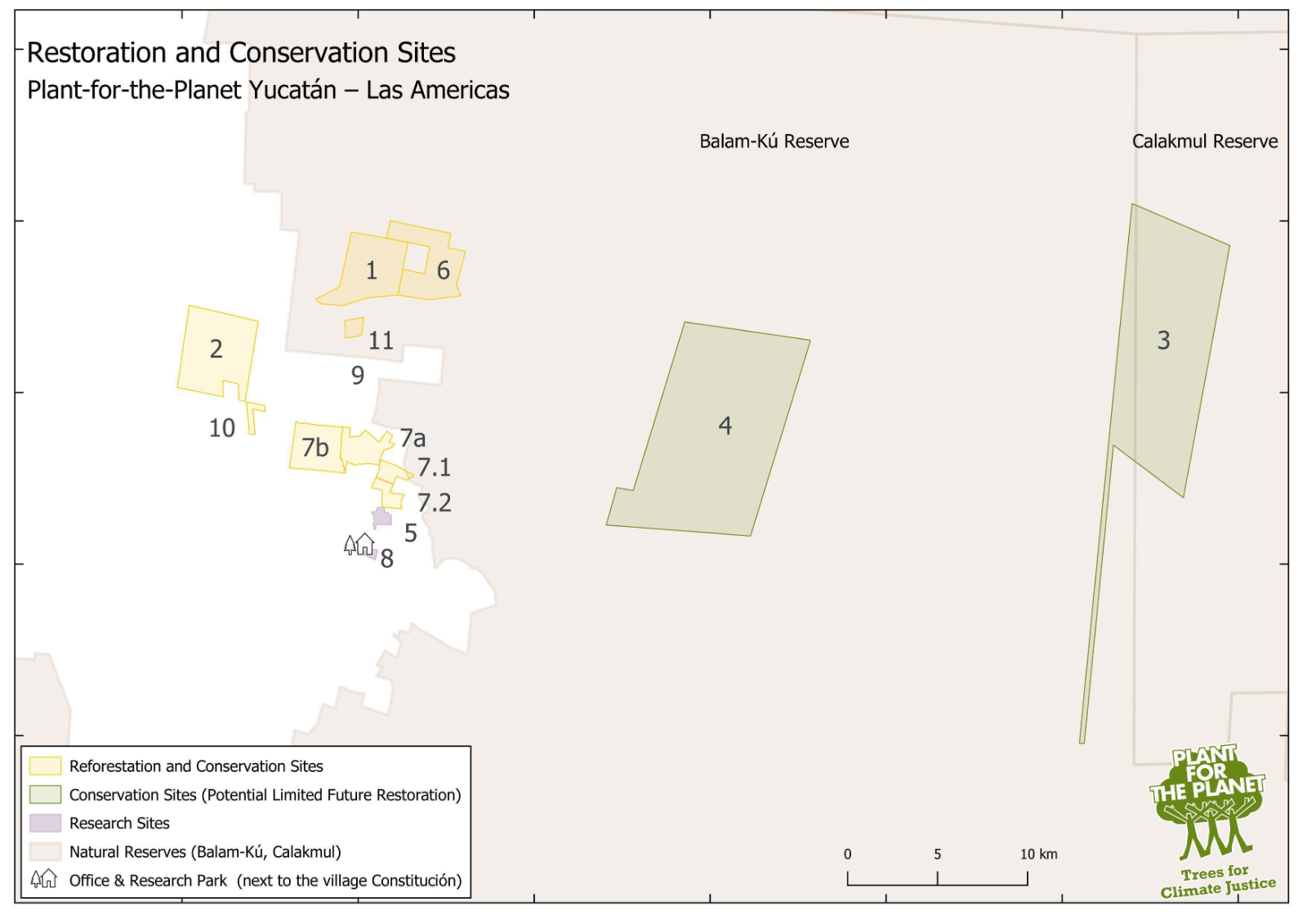
Two mostly-deforested research sites, a total of 129 ha allow for a range of large restoration field experiments.
Additionally, Plant-for-the-Planet’s 20,000 ha of restoration and conservation sites, as well as the 500,000 ha of the Balam-Kú and Balam-Kin reserves, can be used for further (non-destructive) research.
Experimental Nursery
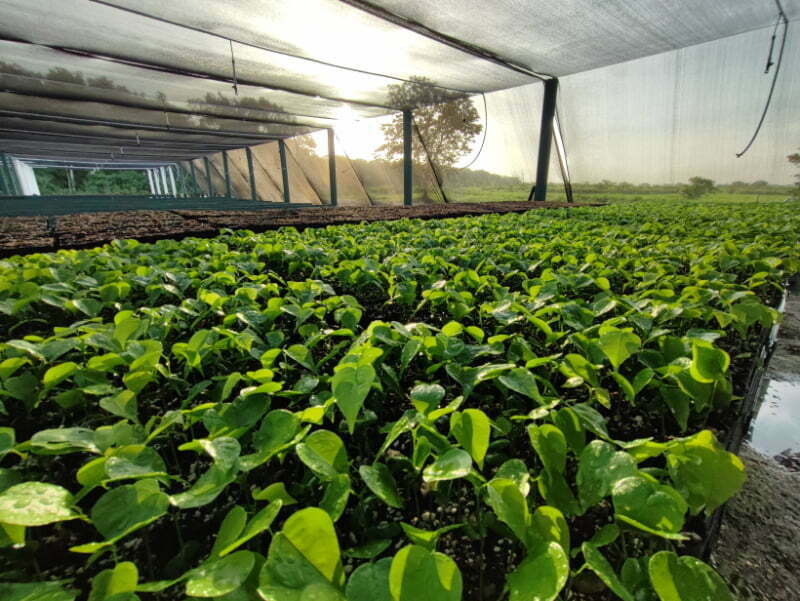
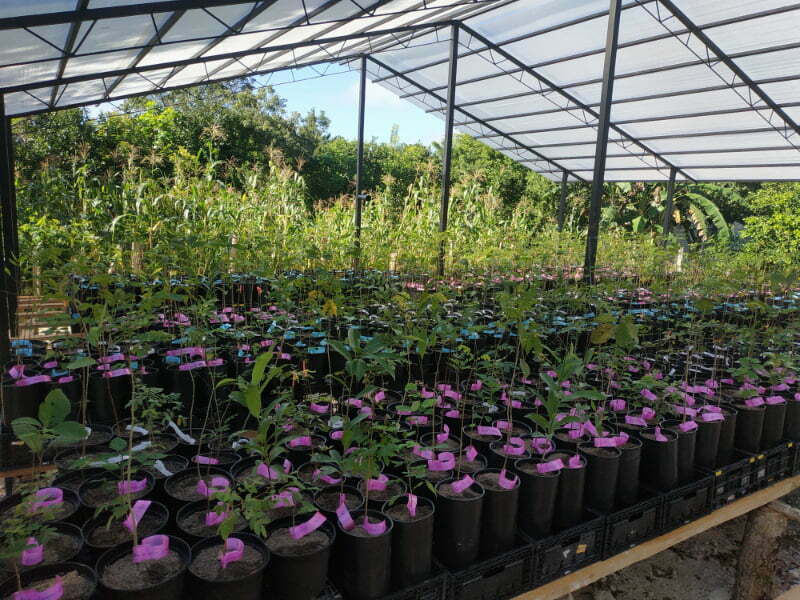
Drying Room
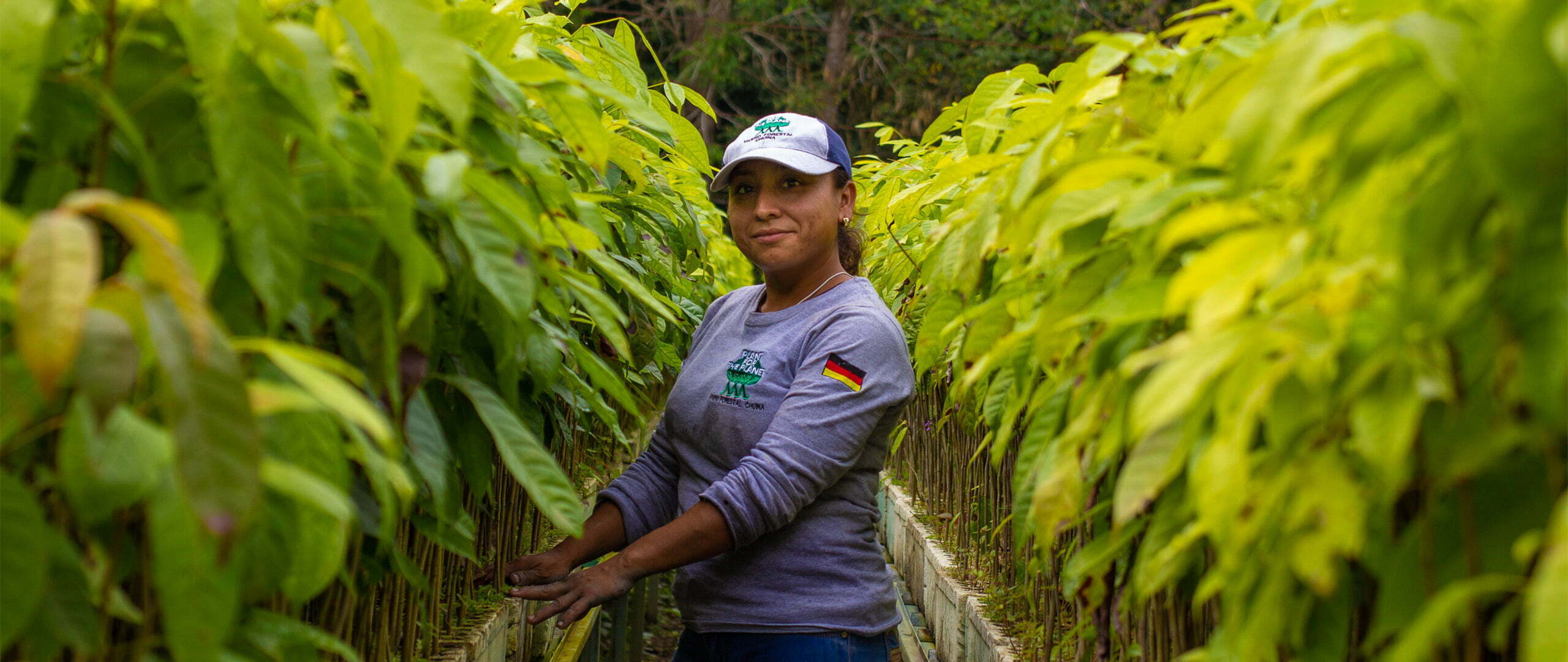
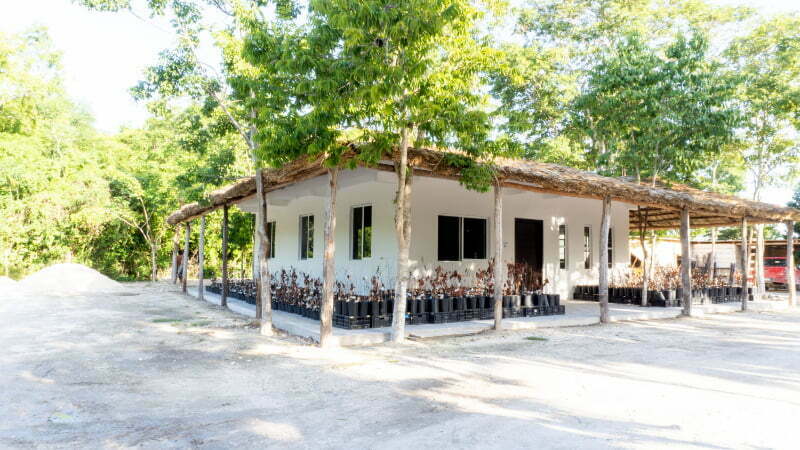
Office & Accommodation
Tour of the Campus
Publications
2025
Gee, A., Werden, L.K., Verduzco-Salazar, O.E., Nie, R. & Waring, B.G. (2025). Secondary succession of a seasonally dry tropical forest is taxonomically stochastic but functionally deterministic. Forest Ecology and Management, 598. https://doi.org/10.1016/j.foreco.2025.123184.
This research took place in the Las Americas 7 sites at Plant-for-the-Planet Mexico and Plant-for-the-Planet Mexico made a vital contribution to data collection through field support, species identification, and the research nursery infrastructure. The paper found that the functional traits of tree species were predictable at different life stages and stages of tropical dry forest succession, and made recommendations for species selection and target states for restoration projects. For more information, see our blog.
2024
Cole, R.J., Werden, L.K., Chiriboga Arroyo, F., Mendez Quirós, K., Quirós Cedeño, G. & Crowther, T.W. (2024). Forest restoration in practice across Latin America. Biological Conservation, 294. https://doi.org/10.1016/j.biocon.2024.110608.
Plant-for-the-Planet Mexico was one of 166 restoration practitioners who contributed to this systematic assessment of forest restoration work across Latin America.
2022
Averill, C., Anthony, M.A., Baldrian, P., Finkbeiner, F., van den Hoogen, J., Kiers, T., Kohout, P., Hirt, E., Reuben Smith, G. & Crowther, T.W. (2022). Defending Earth’s terrestrial microbiome. Nat Microbiol 7, 1717–1725. https://doi.org/10.1038/s41564-022-01228-3.
The authors present active microbiome restoration as a promising method to increase the speed and resilience of restoration, but emphasize that success is determined by ecological context and more research is needed to determine when and where these approaches are most effective. Three of the authors established the microbiome restoration experiment in Las Americas 5 to help address this knowledge gap.
2019
Bastin, J.-F., Finegold, Y., Garcia, C., Mollicone, D., Rezende, M., Routh, D., Zohner, C.M. & Crowther, T.W. (2019). The global tree restoration potential. Science 365, 76-79. 10.1126/science.aax0848.
This paper mapped the global potential tree coverage and highlighted the opportunity for climate change mitigation through global tree restoration. It has been cited 1,527 times. The research was part funded by Plant-for-the-Planet.
2015
Crowther, T., Glick, H.B., Covey, K.R., Bettigole, C., Maynard, D.S., Thomas, S.M., Smith, J.R., Hintler, G., Duguid, M.C., Amatulli, G., Tuanmu, M.-N., Jetz, W., Salas, C., Stam, C., Piotto, D., Tavani, R., Green, S., Bruce, G., Williams, S.J. … Bradford, M.A. (2015). Mapping tree density at a global scale. Nature 525, 201–205. https://doi.org/10.1038/nature14967.
This paper provided the first spatially continuous map of forest tree density at a global scale and has been cited 778 times. Plant-for-the-Planet is acknowledged for "initial discussions and collaboration".




Research Fellowships
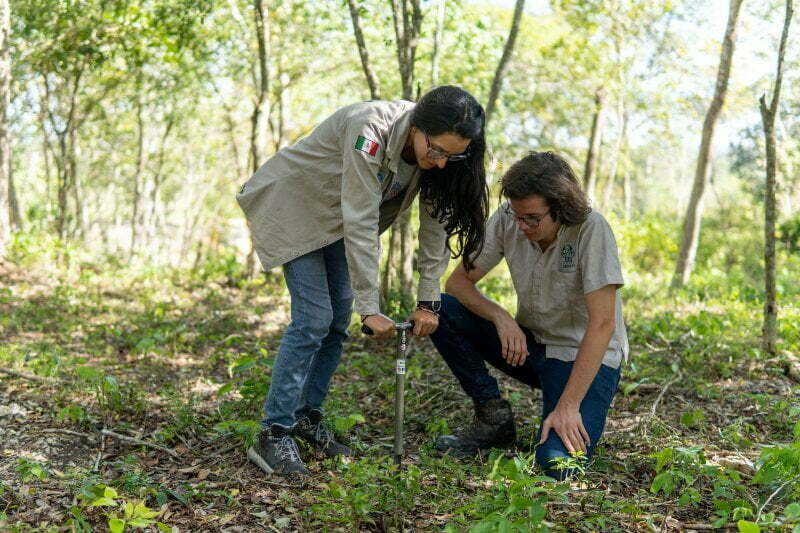
A fieldsite for scientists from all over the worldUniversities and research institutes often lack the facilities to offer researchers the necessary framework conditions to test forest restoration methods in the open field. Especially when it comes to large-scale experiments that require a lot of space. Interested in setting up a restoration field trial with us? Our team is excited to help with setup and data collection for your experiment. And you are welcome to live with us on-site for the duration of your experiment.
Interested in becoming a research fellow? Send your application to [email protected]
Support Us!
We need help to set up a range of further, crucial experiments and to build our restoration advice team so that struggling forest restoration projects around the world can benefit from expert advice.
Interested in supporting us? We’d love to hear from you! [email protected]
Or donate directly!
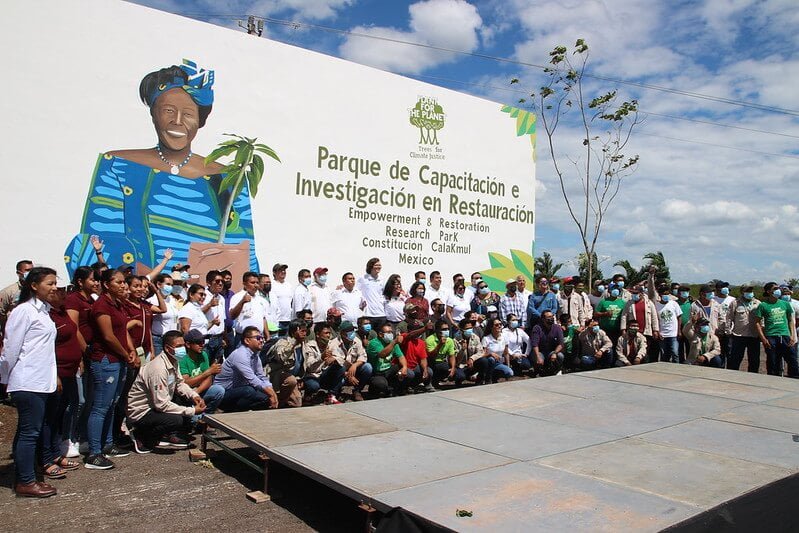
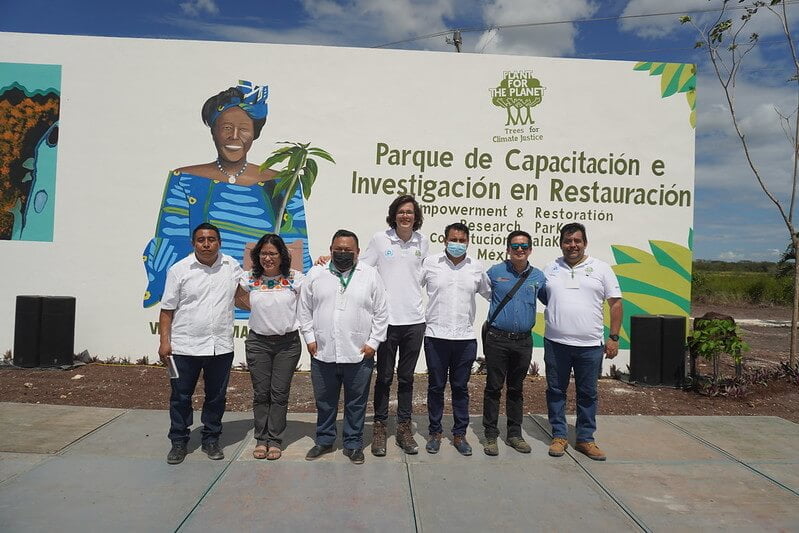
Laying the Cornerstone
Research Partners


Top Partners
Berendsen-Muñoz
Family

Project Partners