

Science-Driven Restoration
for Resilient Forests
Our Restoration Projects as Research Hubs
Plant-for-the-Planet treats its large-scale restoration initiatives as rigorous, long-term research projects. As active members of the global scientific community, we practice openness, collecting continuous field data to understand what drives ecosystem recovery, and sharing that knowledge to make global restoration efforts, more transparent, and science-based.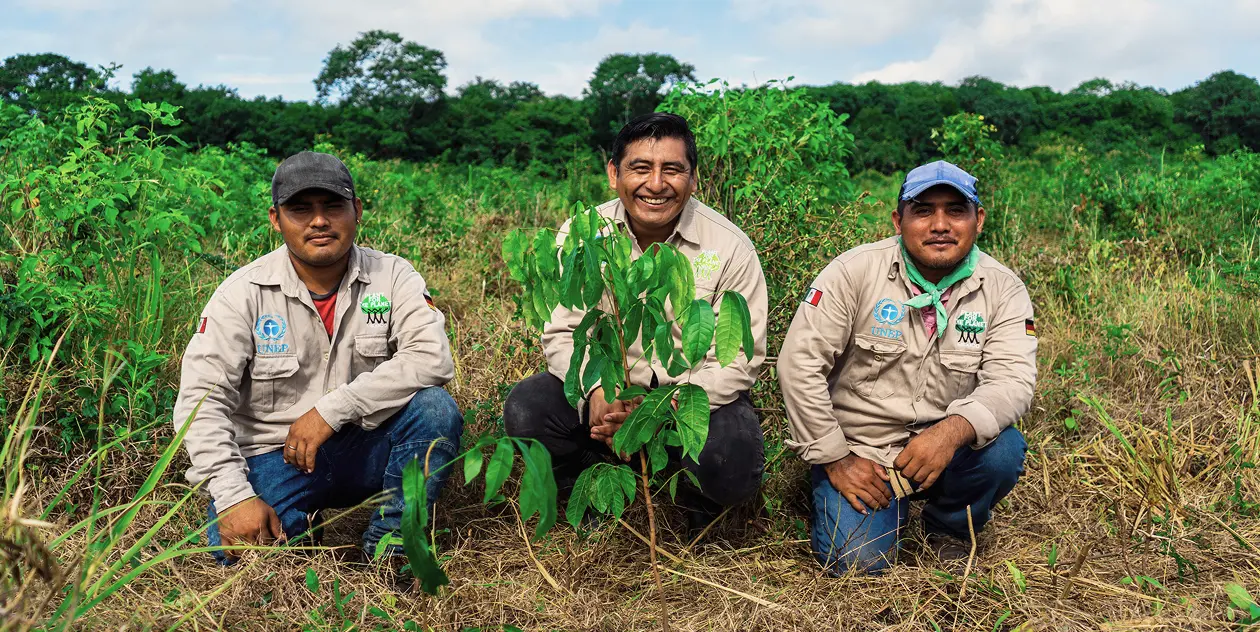
Publications
Plant-for-the-Planet works with leading academics in ad-hoc projects on restoration ecology research.
We have contributed to a series of key studies over the years.
2025
Gee, A., Werden, L.K., Verduzco-Salazar, O.E., Nie, R. & Waring, B.G. (2025). Secondary succession of a seasonally dry tropical forest is taxonomically stochastic but functionally deterministic. Forest Ecology and Management, 598. https://doi.org/10.1016/j.foreco.2025.123184.
This research took place in the Las Americas 7 sites at Plant-for-the-Planet Mexico and Plant-for-the-Planet Mexico made a vital contribution to data collection through field support, species identification, and the research nursery infrastructure. The paper found that the functional traits of tree species were predictable at different life stages and stages of tropical dry forest succession, and made recommendations for species selection and target states for restoration projects. For more information, see our blog.
Cole, R.J., Werden, L.K., Chiriboga Arroyo, F., Mendez Quirós, K., Quirós Cedeño, G. & Crowther, T.W. (2024). Forest restoration in practice across Latin America. Biological Conservation, 294. https://doi.org/10.1016/j.biocon.2024.110608.
Plant-for-the-Planet Mexico was one of 166 restoration practitioners who contributed to this systematic assessment of forest restoration work across Latin America.
Averill, C., Anthony, M.A., Baldrian, P., Finkbeiner, F., van den Hoogen, J., Kiers, T., Kohout, P., Hirt, E., Reuben Smith, G. & Crowther, T.W. (2022). Defending Earth’s terrestrial microbiome. Nat Microbiol 7, 1717–1725. https://doi.org/10.1038/s41564-022-01228-3.
The authors present active microbiome restoration as a promising method to increase the speed and resilience of restoration, but emphasize that success is determined by ecological context and more research is needed to determine when and where these approaches are most effective. Three of the authors established the microbiome restoration experiment in Las Americas 5 to help address this knowledge gap.
Bastin, J.-F., Finegold, Y., Garcia, C., Mollicone, D., Rezende, M., Routh, D., Zohner, C.M. & Crowther, T.W. (2019). The global tree restoration potential. Science 365, 76-79. 10.1126/science.aax0848.
This paper mapped the global potential tree coverage and highlighted the opportunity for climate change mitigation through global tree restoration. It has been cited over 1,500 times. The research was part funded by Plant-for-the-Planet.
Crowther, T., Glick, H.B., Covey, K.R., Bettigole, C., Maynard, D.S., Thomas, S.M., Smith, J.R., Hintler, G., Duguid, M.C., Amatulli, G., Tuanmu, M.-N., Jetz, W., Salas, C., Stam, C., Piotto, D., Tavani, R., Green, S., Bruce, G., Williams, S.J. … Bradford, M.A. (2015). Mapping tree density at a global scale. Nature 525, 201–205. https://doi.org/10.1038/nature14967.
This paper provided the first spatially continuous map of forest tree density at a global scale and has been cited over 700 times. Plant-for-the-Planet is acknowledged for "initial discussions and collaboration".
Discover the Belowground Monitoring Protocols
Free, step-by-step protocols to measure soil health in your restoration project. Developed for restoration organizations and practitioners working in the field.Supporting the Next Generation of Restoration Scientists
We support the next generation of restoration scientists through student internships on the topics of biodiversity conservation, nursery management, and restoration technology. Discover some of the student research projects we have supported over the years:Kevin Idamin Cruz Barahona
Universidad Tecnológica de CalakmulFernando Acosta Magaña
Universidad Tecnológica de CalakmulEfrén Sánchez López
Universidad Tecnológica de CalakmulAntony Zacarías Morales
Instituto Technológico Superior de Escárcega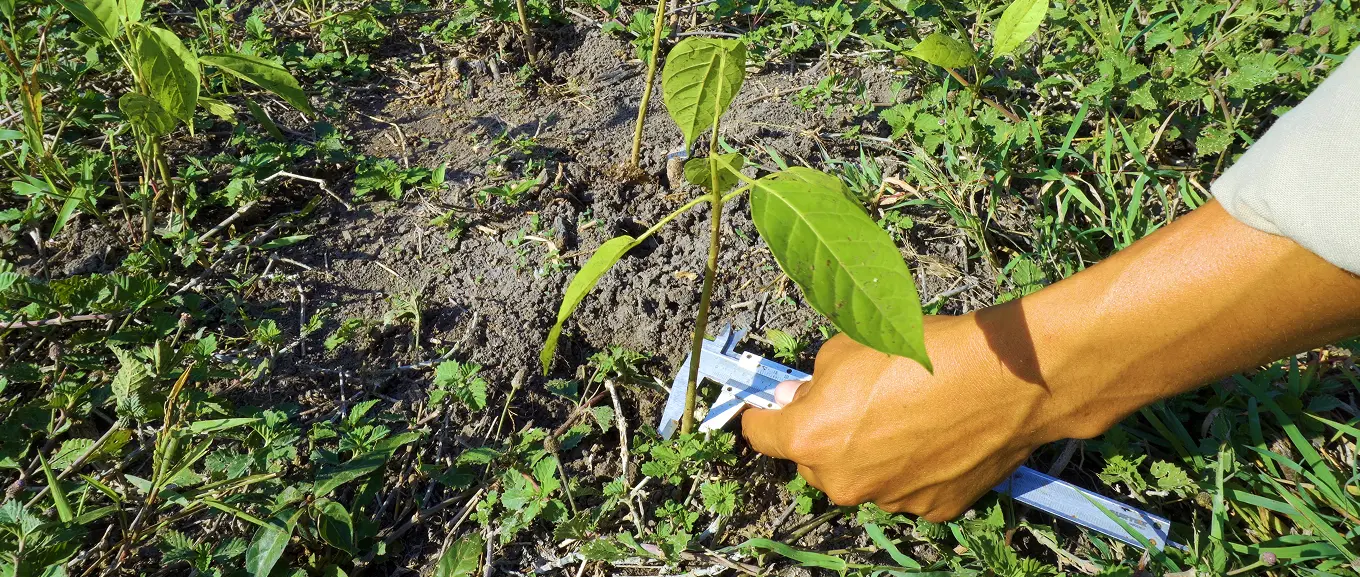
Bridging Academic Science and Field Practice
Discover our free Advisory service for restoration organizations worldwideContact us
Are you an academic researcher, restoration organization, or conservation practitioner looking to collaborate? We actively seek to bridge the gap between ecological science and on-the-ground action. If you are interested, please get in touch.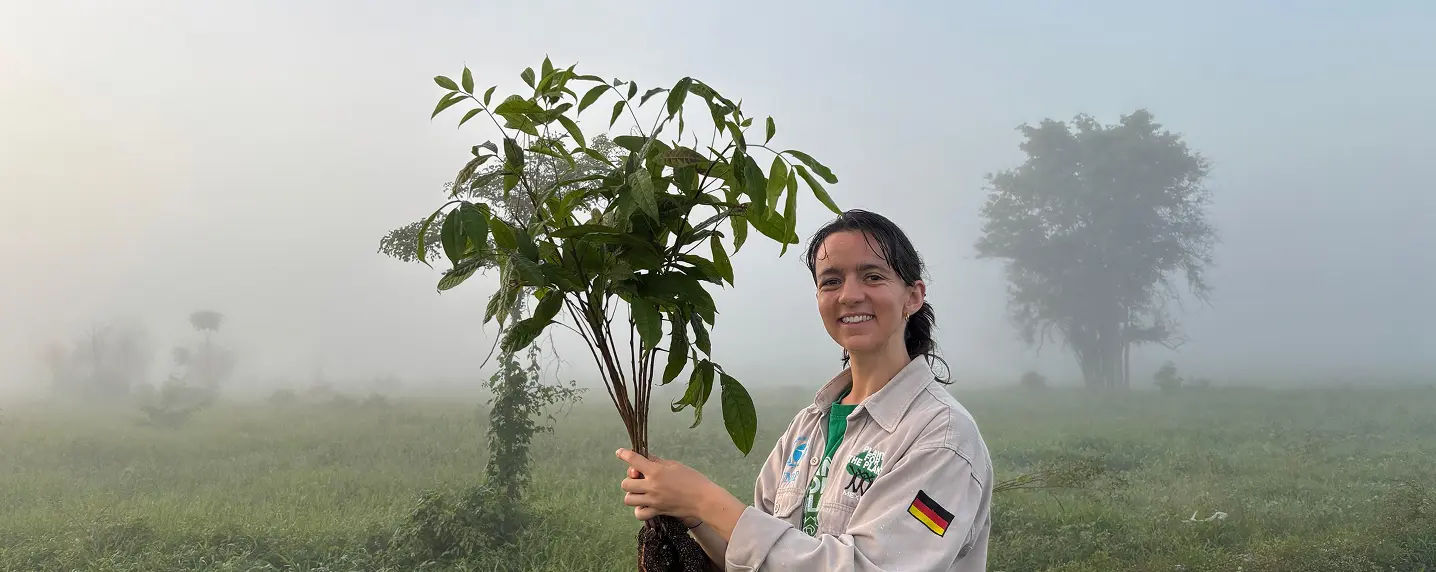
Dr Anna Gee
Project Manager for Forest Restoration and Conservation


