

Belowground Monitoring Protocols
Free, step-by-step protocols to measure soil health in your restoration project, developed for practitioners working in the fieldDiscover Protocols
Why monitor soil in forest restoration?
Forest ecosystems store an estimated 44% of their carbon in the soil. But most forest restoration projects don't monitor belowground changes, and belowground metrics are often missing from global monitoring frameworks.
Monitoring matters because it shows what's working and what isn't, supports adaptive management, and builds transparency for anyone supporting the restoration work.
Degraded soil holds restoration back in three ways:
Physical degradation
Compaction and loss of organic matter limits root growth and reduces water availability.Chemical degradation
Reduced nutrient availability limits plant growth.Biological degradation
Loss of microbial and macroinvertebrate diversity slows nutrient cycling and prevents trees forming symbiotic relationships with fungi and bacteria.Who are these protocols for?
These protocols were written for restoration organizations and restoration practitioners so that research reaches people working on the ground. The protocols explain what practitioners can learn from measuring each metric, provide easy step-by-step instructions for monitoring them in the field, and explain how to interpret the results.Discover the Belowground Monitoring Protocols
Six recommended belowground metrics for restoration projects to measureHint: Start with the General Sampling Protocol
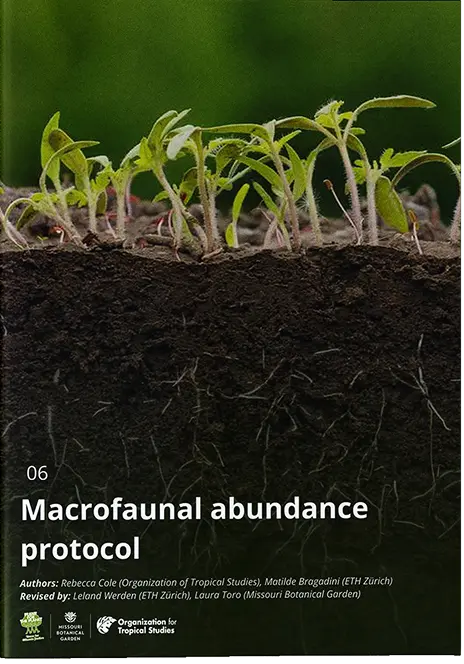
06 Macrofaunal Abundance Protocol:
Soil macrofauna – earthworms, beetles, ants, termites – are the engineers of healthy soil. Their presence and abundance reflect the capacity of your soil to decompose organic matter, cycle nutrients, and maintain structure.Download Protocol
00 General Sampling Protocol:
A general sampling design for all of the indicators. Read this for answers to the most important practical questions when collecting data: where and when to sample, how many samples, and how deep?Download Protocol
01 Bulk Density Protocol:
Bulk density tells you whether soil is compacted. Compacted soils block root growth, reduce water infiltration, and slow forest recovery. Bulk density is also essential for calculating soil carbon stocks.Download Protocol
02 Aggregate Stability Protocol:
Aggregate stability means the ability of clusters of soil particles to resist being broken apart. This tells you whether your soil can resist erosion and absorb rainfall.Download Protocol
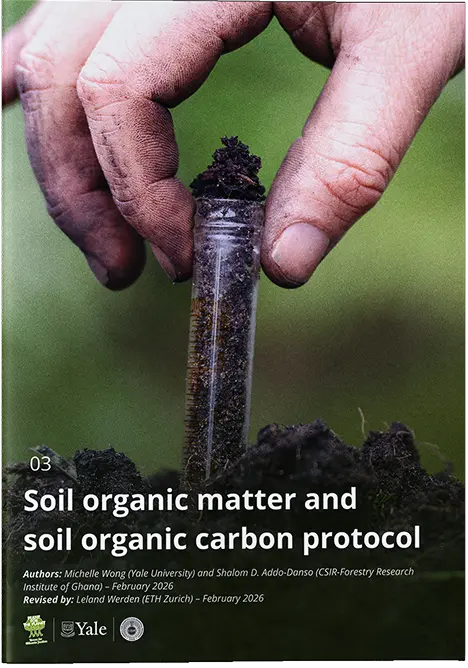
03 Soil Organic Matter and Soil Organic Carbon Protocol:
Soil organic matter is a fundamental driver of soil structure, water-holding capacity, and nutrient cycling. Soil organic matter is also essential for calculating soil carbon stocks.Download Protocol
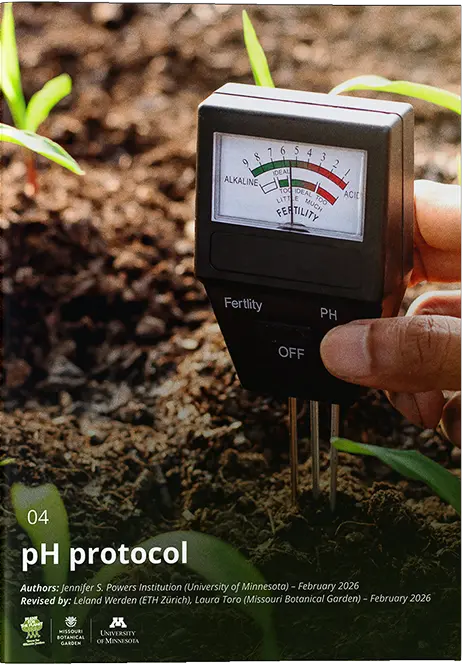
04 pH Protocol:
pH controls which nutrients are available to plants and soil microbes. Knowing soil pH can help you to decide whether amendments are needed and monitor whether the soil can support native species.Download Protocol
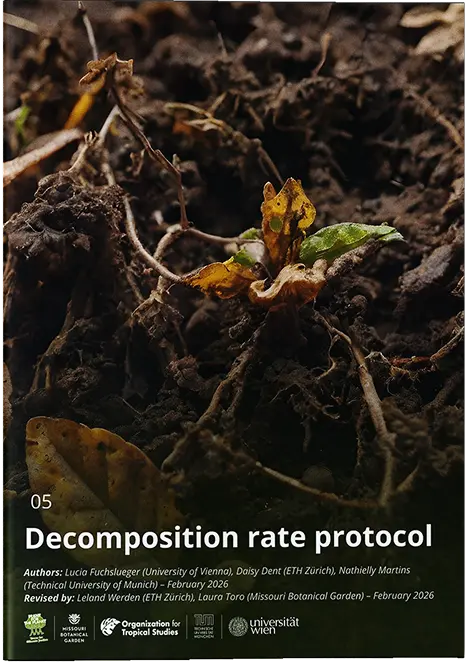
05 Decomposition Rate Protocol
Decomposition rate tells you how quickly dead plant material is being broken down and recycled into the soil. It is controlled by soil biological activity, microclimate, and litter chemistry.Download Protocol
Discover the research behind the protocols
2025
Laura Toro, Leland K Werden, Shalom D Addo-Danso, Kelly M Andersen, Sarah Batterman, Matilde M Bragadini, Pooja Choksi, Rebecca J Cole, Liza S Comita, Daniela Cusack, Daisy H Dent, Lee H Dietterich, Joshua B Fisher, Katrin Fleischer, Lucia Fuchslueger, Nohemi Huanca-Nunez, Janey R Lienau, Lindsay A McCulloch, Ember M Morrissey, Jennifer S Powers, Mareli Sánchez-Juliá, Oscar Valverde-Barrantes, Anita Weissflog, Michelle Y Wong, Integrating belowground recovery into tropical forest restoration design and monitoring, BioScience, Volume 75, Issue 11, November 2025, Pages 937–952. https://doi.org/10.1093/biosci/biaf097Using these protocols? We'd love to hear from you!
We're collecting real examples from restoration organizations using these protocols. Leave your email and we'll keep in touch and will share with you any updates about the soil monitoring protocols and beyond.Acknowledgement
We thank the authors and editors of these protocols for their work to get this information into the hands of those who can use it to improve global forest restoration: University of Minnesota, Yale University, West Virginia University, Missouri Botanical Garden, CSIR Ghana, Universität Wien, Technical University of Munich, and the Organization for Tropical Studies.Contact us
Are you a restoration practitioner looking to collaborate? We actively seek to bridge the gap between ecological science and on-the-ground action. If you have any questions or feedback, please get in touch!
Dr Anna Gee
Project Manager for Forest Restoration and Conservation


